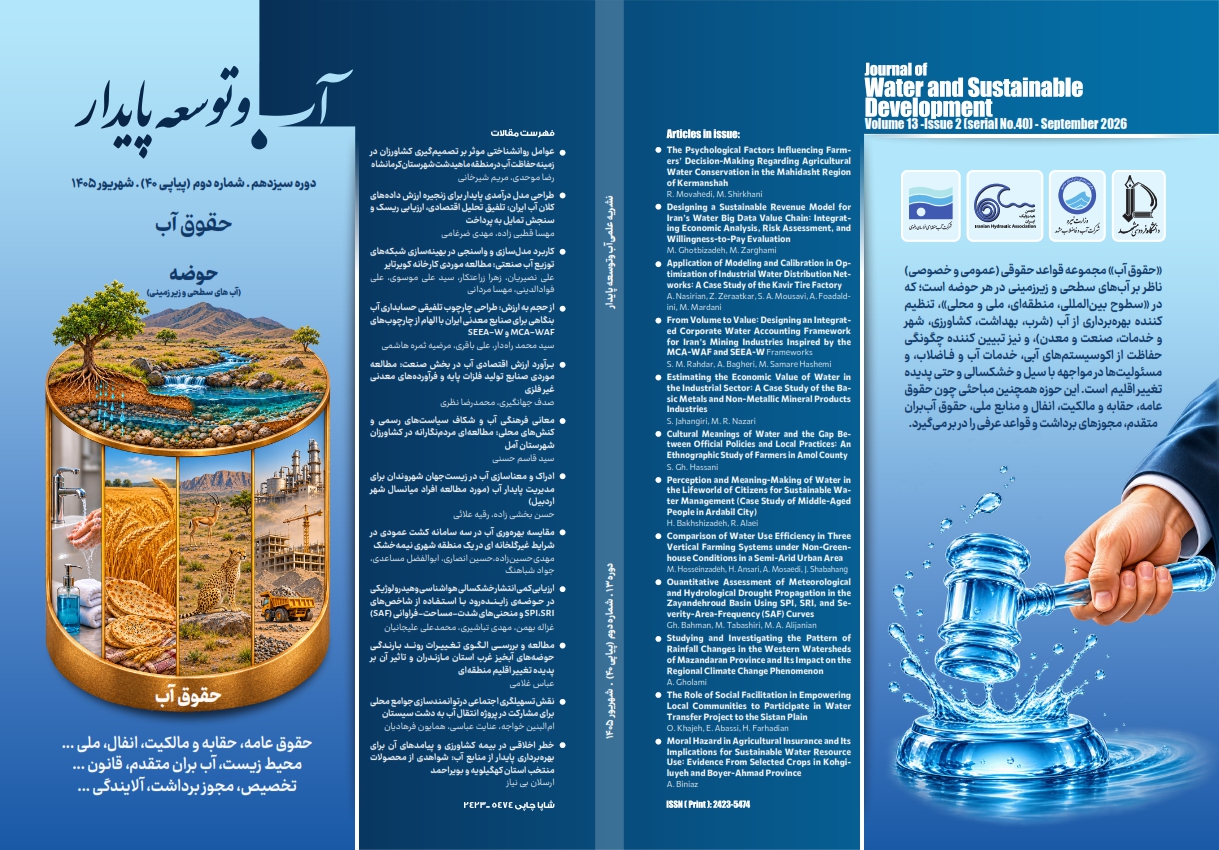
Water Rights
Pages 1-3
Anoosh Nori Esfandiyari
Abstract In its broadest definition, water law refers to the legal framework governing fresh water and its sources. Viewed in this comprehensive sense, water law is responsible for regulating and managing activities across various sectors—such as the provision of drinking water and water for agriculture, hydroelectric power generation, mining, and other industries—as well as wastewater treatment and waterborne transport. In recent decades, the scope of water law has expanded to include the protection of aquatic ecology and alignment with environmental laws concerning water resources. Water law oversees the organization and regulation of water-related services and societal uses, while providing safeguards against disruptions and events such as floods and droughts.
Consequently, water law—intersecting with social systems across various levels (international, transnational, national, and local) and diverse societal sectors (such as food, energy, and urban infrastructure)—must address and resolve a multitude of complex issues. Therefore, the formulation and implementation of appropriate water legislation within a coherent legal framework constitute a critical endeavor for strengthening the legal system and governance of any society. In this context, what major oversights, shortcomings, and challenges might Iranian society be facing? And what overarching solutions should be devised to avoid or address these issues?